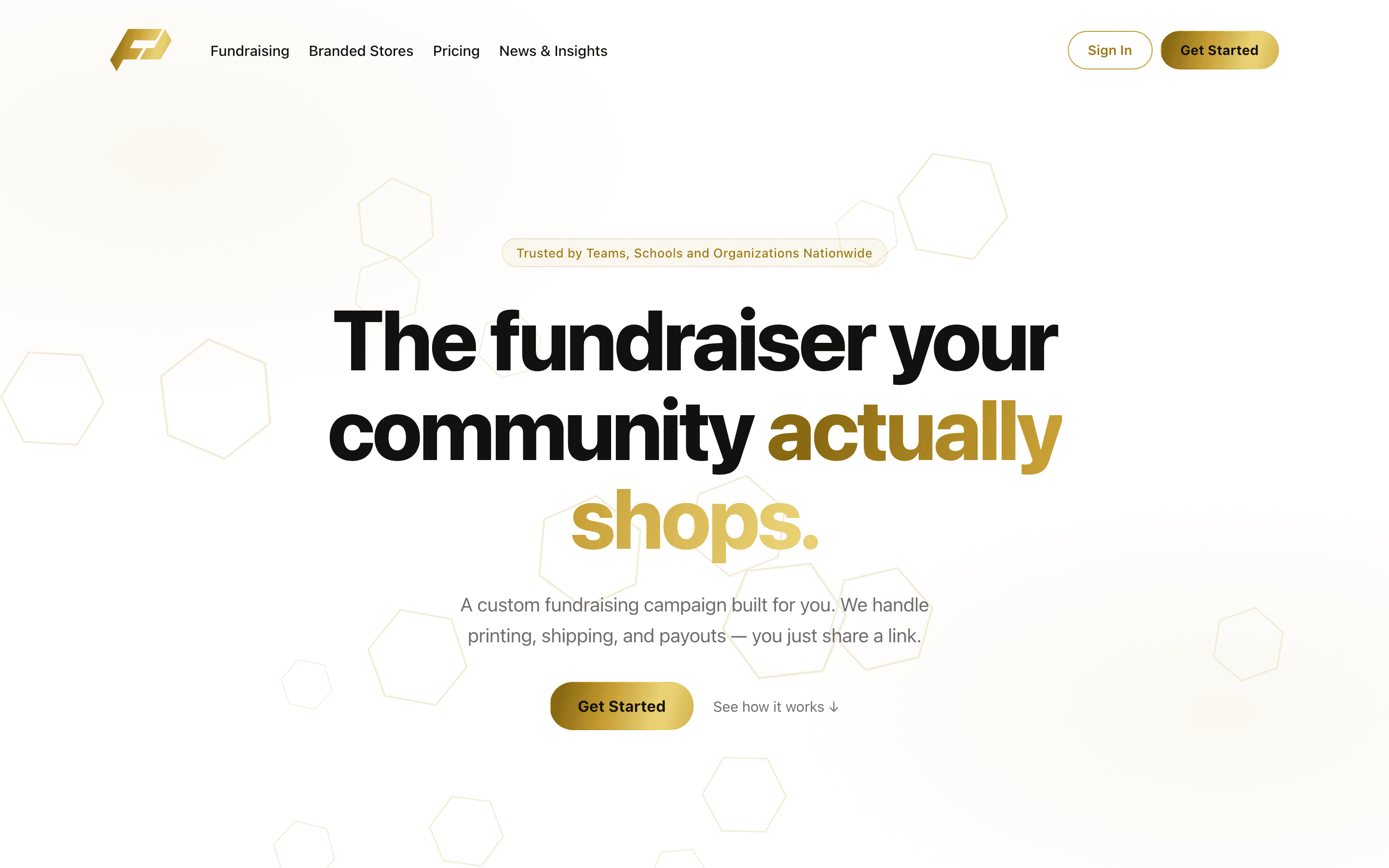
The fundraiser your community actually shops.
A custom fundraising platform — branded campaigns, on-demand stores, and automatic revenue-share payouts, taking a group from logo to live store in a day.
Fundraising carries a tax that has nothing to do with the cause. Order forms. Boxes in a garage. A volunteer chasing down payments and handing out product one person at a time. Project Fundraise removes all of it — and replaces it with something that feels like ordinary online shopping.
We set out to make fundraising work like modern e-commerce. A group shares one link, supporters shop a store branded to that group, and every order is printed, shipped, and paid out without anyone on the group's side touching inventory. The hard, unglamorous back end — fulfilment, logistics, splitting the money — was designed from the start to be invisible.
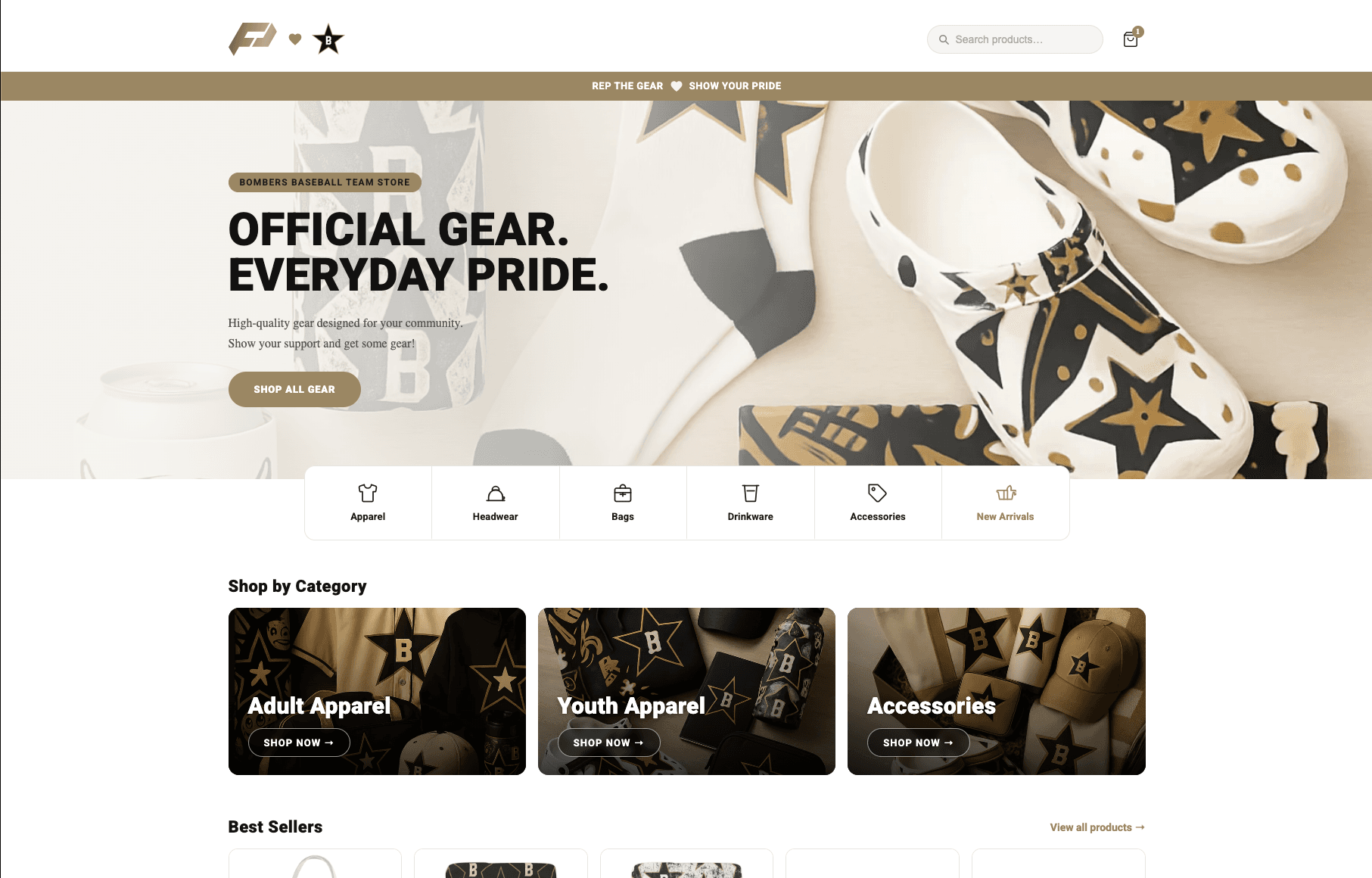
The commerce runs on Shopify: branded storefronts, checkout, and catalog, with print-on-demand fulfilment behind it. That decision is what makes "zero inventory" real — nothing is bought up front, nothing is warehoused, and no one packs a box. A supporter checks out like they would anywhere else, and the order routes straight to production.
On top of that we built a custom React dashboard — the product the group actually lives in. It is where a team spins up a campaign, picks the merch that gets branded to them, shares the store link, and watches orders and earnings land in real time. The fundraising-specific flows that Shopify was never meant to handle live here, shaped around how a school, club, or team actually runs a drive.
Firebase is the glue underneath: authentication, the realtime campaign and order data the dashboard reads, and the automated revenue-share logic that splits every sale and pays the group its cut on its own. Mature commerce, a bespoke dashboard, and a realtime serverless backend are what let a group go from logo to a live store in under a day.
RFD owned the whole arc — planning, design, development, and delivery. There was no seam between the people who scoped the product and the people who shipped it, which is exactly why the model holds together end to end rather than in three disconnected pieces.
The result is a link-and-share fundraiser where the hard parts are hidden. A group tells us who they are, picks their products, and goes live the same day at zero upfront cost. From there the money and the merchandise take care of themselves — which is what a fundraiser was always supposed to do.
Challenge
Fundraising still runs on friction that has nothing to do with the cause: paper order forms, inventory bought up front and stored in someone's garage, volunteers chasing payments, and product handed out box by box. Every one of those steps costs a group time, money, and goodwill — and none of them is why anyone signed up to raise money in the first place. The brief was to make fundraising feel like modern e-commerce — share a link, let supporters shop, and let the money and the merch handle themselves — while the messy back end of printing, shipping, and splitting payouts stays completely invisible.
Approach
We built on commerce rails that already do the hard parts well, then wrapped them in an experience made specifically for fundraising. Shopify powers the branded storefronts, checkout, and catalog, with print-on-demand fulfilment behind it — so there is no inventory and nothing to ship by hand. A custom React dashboard is the group-facing product: spin up a campaign, pick products, and watch orders and earnings arrive in real time. Firebase is the glue underneath — authentication, realtime campaign and order data, and the automated revenue-share payout logic that splits every sale and pays it out on its own. Mature commerce plus a bespoke fundraising dashboard plus a realtime serverless backend is what makes the home-page promise true: live in under a day, zero inventory, automatic payouts.
Outcome
A group goes from logo to a live, branded store in under twenty-four hours, at zero upfront cost. They never touch inventory, never pack a box, and never chase a payment — every order is printed, shipped, and split automatically, with the revenue share paid out on its own. The unglamorous parts of fundraising, the parts that used to sink campaigns, simply happen in the background.
Guided setup
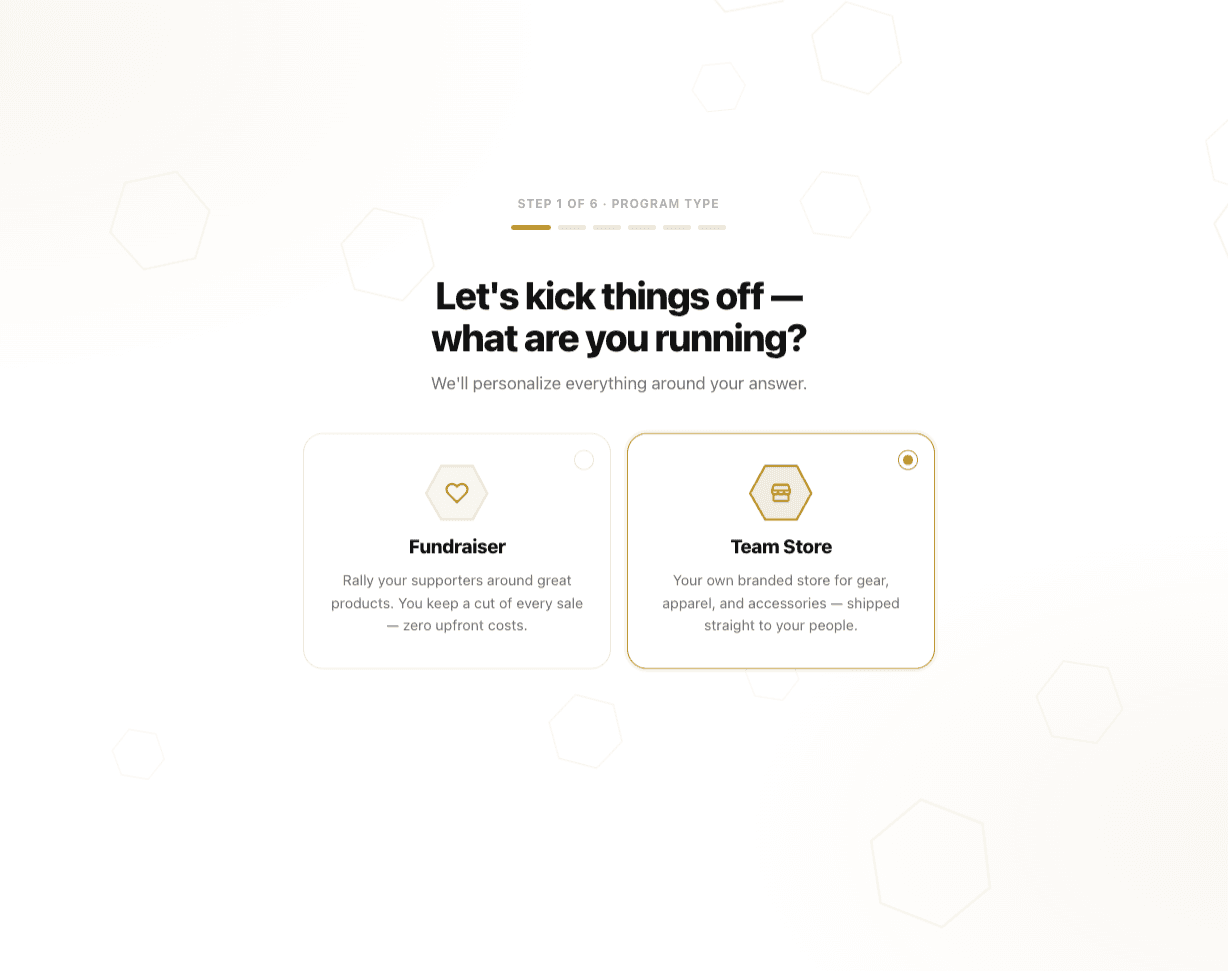
A guided, six-step flow from program type to a live store.
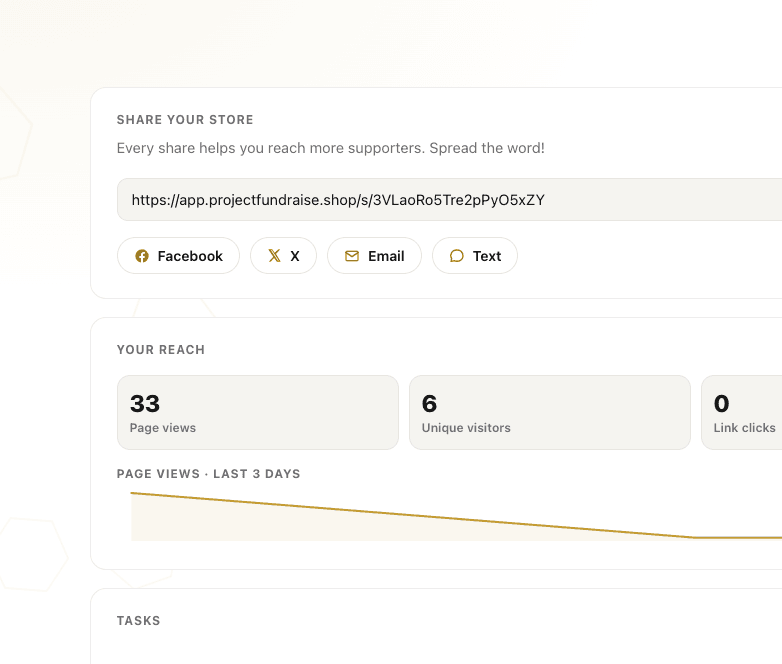
The group dashboard
Share tools, live reach analytics, and next-step tasks in one place.
Logo to a shareable link in one business day.
The process
We reframed fundraising as modern e-commerce — share a link, let supporters shop, and let the money and merch handle themselves.
We built on Shopify's commerce rails — branded storefronts, checkout, and catalog with print-on-demand behind them — so there's no inventory to ship by hand.
We built a custom React dashboard where a group spins up a campaign, picks products, and watches orders and earnings arrive in real time.
Firebase ties it together — authentication, realtime data, and the automated revenue-share logic that splits every sale and pays out on its own.
Scoped, designed, engineered and shipped end-to-end by the people who planned it — the websites and software growing businesses run on.
Have something like this?
Tell us what you're building. We'll tell you how we'd approach it — a clear plan and a fixed first step, no obligation.
Schedule a call